
- English
- Español
- Português
- русский
- Français
- 日本語
- Deutsch
- tiếng Việt
- Italiano
- Nederlands
- ภาษาไทย
- Polski
- 한국어
- Svenska
- magyar
- Malay
- বাংলা ভাষার
- Dansk
- Suomi
- हिन्दी
- Pilipino
- Türkçe
- Gaeilge
- العربية
- Indonesia
- Norsk
- تمل
- český
- ελληνικά
- український
- Javanese
- فارسی
- தமிழ்
- తెలుగు
- नेपाली
- Burmese
- български
- ລາວ
- Latine
- Қазақша
- Euskal
- Azərbaycan
- Slovenský jazyk
- Македонски
- Lietuvos
- Eesti Keel
- Română
- Slovenski
- मराठी
- Srpski језик
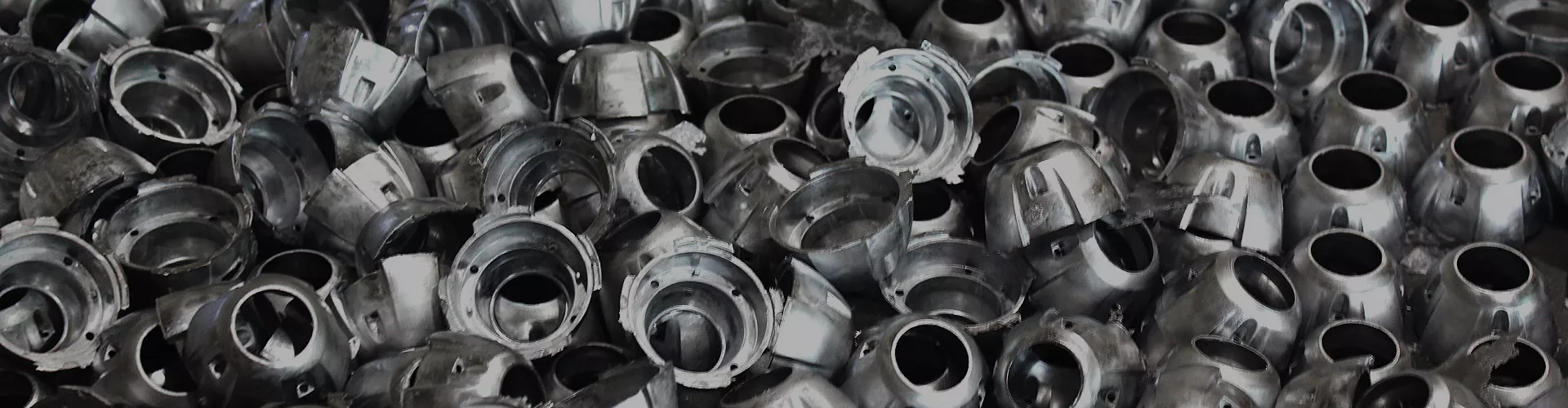



Die Casting Exhaust Pipe
Xiamen Hongyu Intelligent Technology Co., Ltd. specializes in the customized research and development as well as mass production of Die Casting Exhaust Pipe. In response to the common problems of traditional welded exhaust pipes, such as cracking and air leakage, we adopt a high-pressure die-casting integrated molding process to provide metal components for exhaust systems of various vehicle models with more reliable sealing and longer lifespan. We also support customization based on drawings and samples.
Send Inquiry
Product Description
Product Introduction
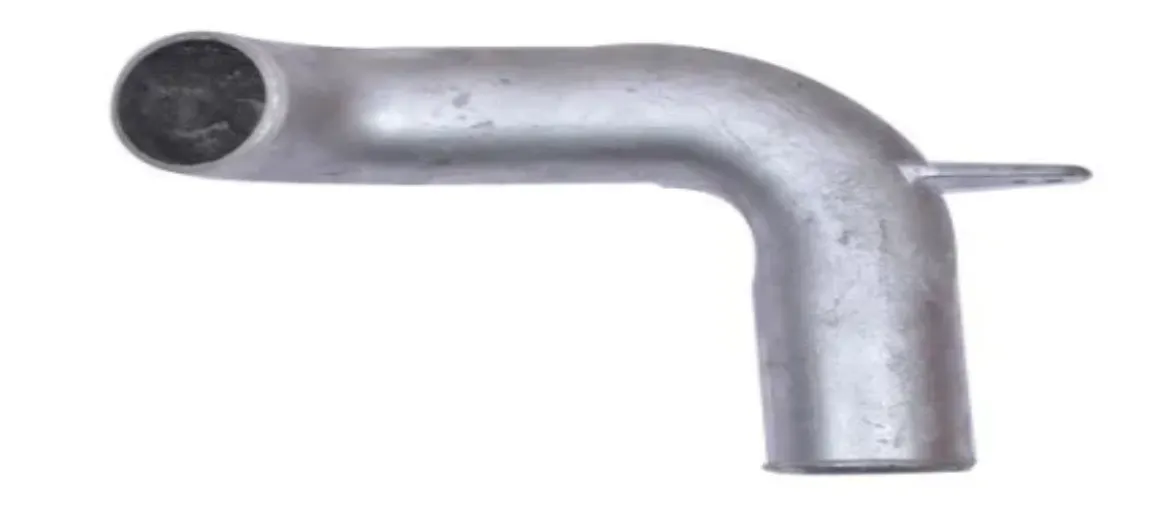
The die-cast exhaust pipe is a core metal flow-diverting component in the vehicle exhaust system, connecting the engine exhaust end with the mid and rear section noise reduction system. It is responsible for exhaust discharge and noise reduction buffering. We use the high-pressure die-casting integrated molding process to eliminate weak points in the structure through welding seams, providing high-strength and high-sealing exhaust pipe solution packages for passenger cars, off-road vehicles, and modified vehicles. Compared with the traditional multi-segment curved pipe welding process, the die-cast integrated molding structure has an essential improvement in product consistency and long-term reliability. Our products have been verified through years of actual vehicle installation, and they perform stably under various harsh conditions. The overall strength of the die-cast car exhaust pipe is 30% higher than that of the welded pipeline, and the exhaust back resistance is lower, effectively extending the service life of the entire vehicle exhaust system.
Product Highlights
1. Integrated die-casting structure completely eliminates weld cracks
The Die cast car exhaust pipe is made through high-pressure die-casting, resulting in a valve body without any welding seams. This avoids the problem of material brittleness in the heat-affected zone caused by welds. The flow channels, mounting seats, and interfaces are all integrated during the die-casting process. Subsequent only require a small amount of fine processing. During mass production, the size deviation of each piece can be controlled within ±0.1mm. The internal flow channels of the Die Casting Exhaust Pipe are smooth without weld scars, and the exhaust back resistance is approximately 15% lower than that of traditional welded pipelines.
2. Precision flange sealing, no leakage at the interface
Exhaust pipe interface leakage is the most common failure point. The exhaust flange we provide with die-casting is made through integrated die-casting and then CNC precision processing. The flatness of the sealing surface is controlled within 0.03mm. Combined with a high-temperature-resistant graphite gasket, it can maintain pressure for 30 seconds at 0.35MPa without pressure drop. The integrated die-cast flange will not deform due to welding heat and will not have the problem of the sealing surface warping and leakage during long-term use.
3. Temperature resistance and corrosion resistance, longer service life
The valve body substrate is made of high-strength die-cast aluminum alloy, and the surface is treated with high-temperature powder coating. The long-term working temperature can reach 550℃. The tail section connection is paired with stainless exhaust tubing. In rainy, snowy, and salt spray environments, its corrosion resistance performance is much better than that of ordinary carbon steel pipelines. The neutral salt spray test lasts for 720 hours without rust, and the vehicle service life can be synchronized with the vehicle.
4. Multi-model Compatibility and Rich Customization Experience
The chassis of off-road vehicles is subjected to harsh conditions, with large suspension travel and frequent impacts. The exhaust system of such vehicles requires high resistance to shock. We have developed multiple mold-making schemes for the rear exhaust systems of off-road vehicles like Jeep JK Cat Back Exhaust, and are familiar with the chassis layout and approach angles. During the design stage, we adjust the pipe positions to the scheme with the lowest risk of impact.During the design phase, we will raise the lowest point of the pipeline to be above 220mm from the ground, thereby significantly reducing the risk of bottom impact. For modified and upgraded vehicles, we can cooperate with brands like Vance and Hines Exhaust to provide matching specifications, develop corresponding die-cast flange interfaces, and support surface treatments such as polishing and black titanium coating.
Technical Specifications
| Project | Parameter Description |
| Product Name | Die Casting Exhaust Pipe |
| Basic Process | High-pressure die casting, CNC precision machining, surface treatment |
| Optional Materials | ADC12 die-cast aluminum alloy, 304 stainless steel |
| Interface Form | Flange/Clamp connection, customizable according to drawings |
| Operating Temperature | Long-term 550℃, peak short-term 700℃ |
| Sealing Performance | 0.35MPa pressure retention for 30 seconds, pressure drop ≤ 0.002MPa |
| Surface Treatment | High-temperature spray painting electrophoretic coating ,polishing,black titanium coating |
| Delivery Documents | Material report,flaw detection report,airtightness test record |
Note: The above are general reference specifications. The final parameters shall be based on the confirmed vehicle assembly drawings provided by you. For special conditions, please communicate in advance and complete the vehicle assembly interference verification before mold release.
Quality Control: Each batch is traceable.
Each batch of raw materials is kept with material certificates; samples of the die-cast blanks are sampled for X-ray flaw detection to check internal defects; after machining, a full inspection of the flange surface flatness is conducted; each finished product is subjected to airtightness testing, and any non-conforming products will not be released. As a professional exhaust pipe manufacturer, we have established a batch traceability system, with records from melting, die-casting to final product inspection at every step. After the first piece is confirmed to be qualified, batch production can be initiated. The sampling rate for bulk production is no less than 5% to ensure consistency between the bulk production and the sample.
Customization Cooperation Process
1. Demand Connection: Receive your drawings, digital models or samples, and confirm the interface specifications and installation requirements
2. Engineering Evaluation: Verify the feasibility of die-casting and the risk of vehicle assembly interference, and output a solution and quotation
3. Mold Development: Customize the die-casting mold, complete the trial mold and modification
4. Sample Production: Produce the first piece, complete the size and airtightness tests, and deliver for confirmation
5. Vehicle Assembly Verification: Confirm that there is no interference or resonance abnormal noise in the actual vehicle installation
6. Batch Production: After verification is passed, start mass production, and implement full-process quality inspection
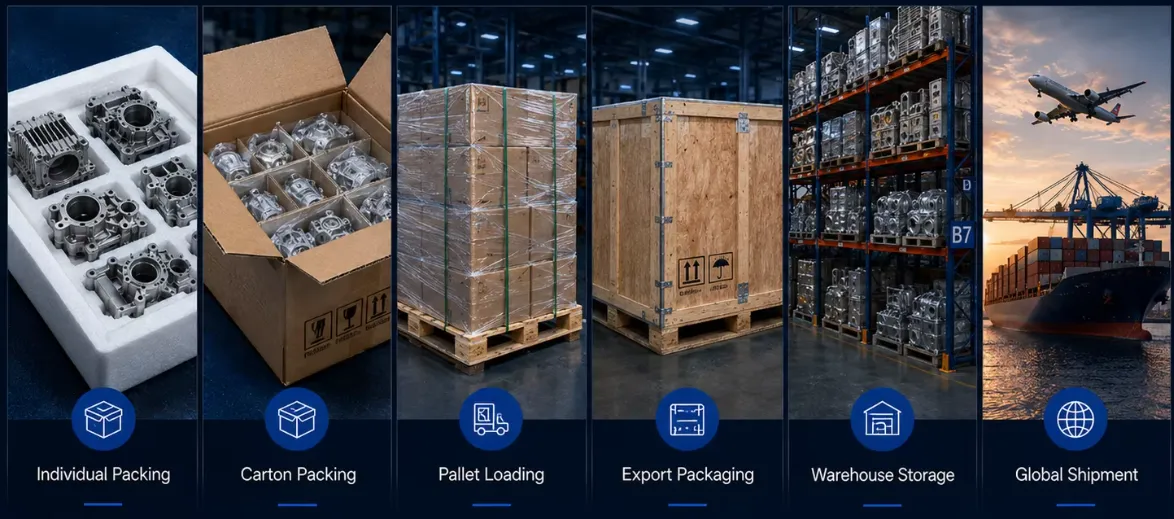
7. Inspection and Delivery: After final inspection is qualified, package for shipment, and simultaneously deliver inspection materials
Why choose us?
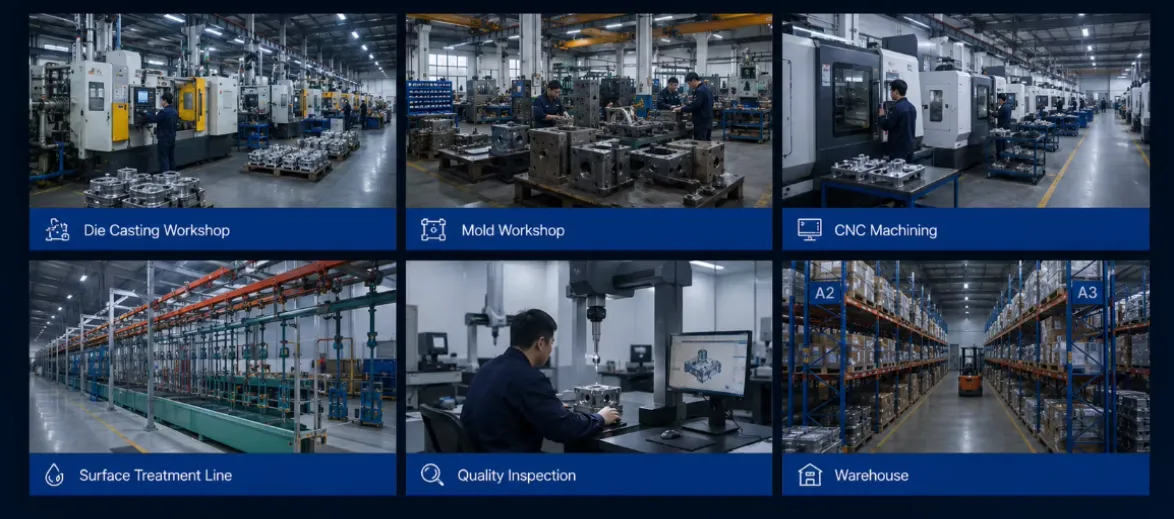
From mold development, die-casting molding, CNC precision processing to final gas-tightness testing, the entire production line is completed in a closed loop within the same factory, with core processes not outsourced. Before mold release, we conduct die-casting mold flow simulation to predict internal defects such as shrinkage cavities and cold shuts in advance, avoiding the waste of time due to repeated mold modifications. As a reliable Exhaust pipe suppliers, we are familiar with the off-road vehicle chassis avoidance design and modification market requirements. Each batch of products comes with X-ray flaw detection reports and gas-tightness records, supporting small-batch sample verification before scaling up production. Our Die Casting Exhaust Pipe has been exported to many countries in North America and Southeast Asia. We welcome you to send the drawings and we will feedback the assessment results as soon as possible.
FAQ
How can I obtain the precise quotation for the parts?
We can provide an accurate quotation based on your 2D/3D drawings (STEP/IGS/PDF), materials, quantity, tolerances, surface treatment and delivery requirements.
Can I remotely track the production progress?
Yes. After the order is confirmed, we will provide a detailed production plan and send a weekly progress report, including actual photos and videos.
What tests will be conducted on the finished exhaust pipe?
Each finished product undergoes an airtightness test (with a pressure of 0.35 MPa maintained for 30 seconds), and a comprehensive inspection of key dimensions. The raw materials are sampled proportionally for X-ray flaw detection to check for internal air holes, ensuring that there will be no air leakage after assembly.
Do you accept small batch trial orders?
After the technical solution is confirmed and the first sample is verified for loading, we can accept small-scale trial orders to help you verify the loading effect first before expanding production.
Can I have my logo printed on the product?
Yes. Please notify us formally before production and first confirm the design based on our samples.
Do you offer design support or DFM analysis?
Yes. Our engineers provide DFM (Design for Manufacturing) feedback to optimize the design of parts, reduce costs and enhance formability.
Related Category
Send Inquiry
Please feel free to give your inquiry in the form below. We will reply you in 24 hours.