
- English
- Español
- Português
- русский
- Français
- 日本語
- Deutsch
- tiếng Việt
- Italiano
- Nederlands
- ภาษาไทย
- Polski
- 한국어
- Svenska
- magyar
- Malay
- বাংলা ভাষার
- Dansk
- Suomi
- हिन्दी
- Pilipino
- Türkçe
- Gaeilge
- العربية
- Indonesia
- Norsk
- تمل
- český
- ελληνικά
- український
- Javanese
- فارسی
- தமிழ்
- తెలుగు
- नेपाली
- Burmese
- български
- ລາວ
- Latine
- Қазақша
- Euskal
- Azərbaycan
- Slovenský jazyk
- Македонски
- Lietuvos
- Eesti Keel
- Română
- Slovenski
- मराठी
- Srpski језик



Custom Metal Stamping Dies
Xiamen Hongyu Intelligent Technology Co., Ltd. designs and builds Custom Metal Stamping Dies for both in-house production and overseas customers. Strip layout, die structure and tool steel are selected around the actual press, so the tool runs stable at production speed and holds part tolerance over long runs. Progressive, compound and single-station structures are all supported, with tryout samples, first-off reports and spare parts supplied with the tooling.
Send Inquiry
Product Description
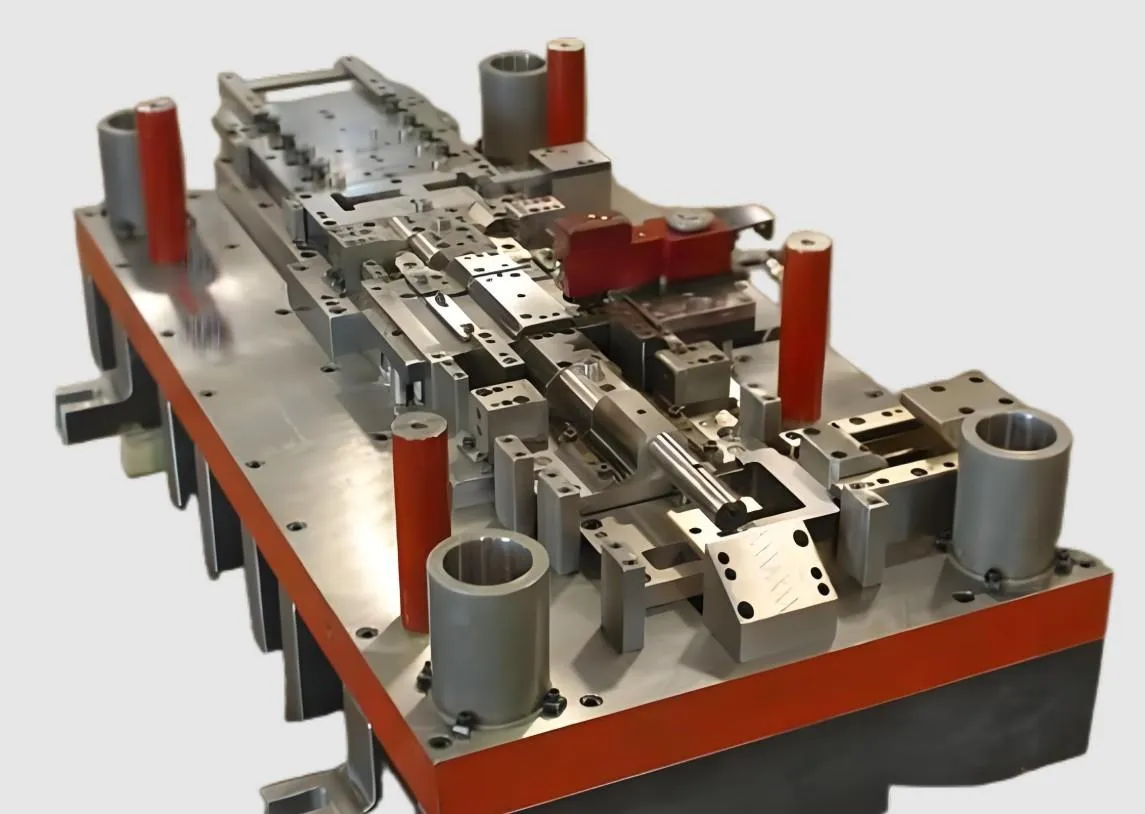
Xiamen Hongyu Intelligent Technology Co., Ltd. is a tooling manufacturer covering die design, precision machining, tryout and stamping production. A Custom Metal Stamping Dies project is decided at the strip layout stage: how many stations, where the pilots sit, how the carrier strip holds the part, and where the scrap falls. Get that wrong and the die will still close, but the parts will drift out of tolerance once the press speeds up.
Stamping die solution development and in-house debugging
The tool is built from the part drawing outward. We confirm material grade, thickness, tolerance and annual volume first, then choose between progressive, compound and single-station structures. Machining, assembly and tryout are done in our own tool room, so a change in punch clearance or stripper pressure does not wait on an outside supplier.
Product Core Features
1. Volume-oriented progressive structure
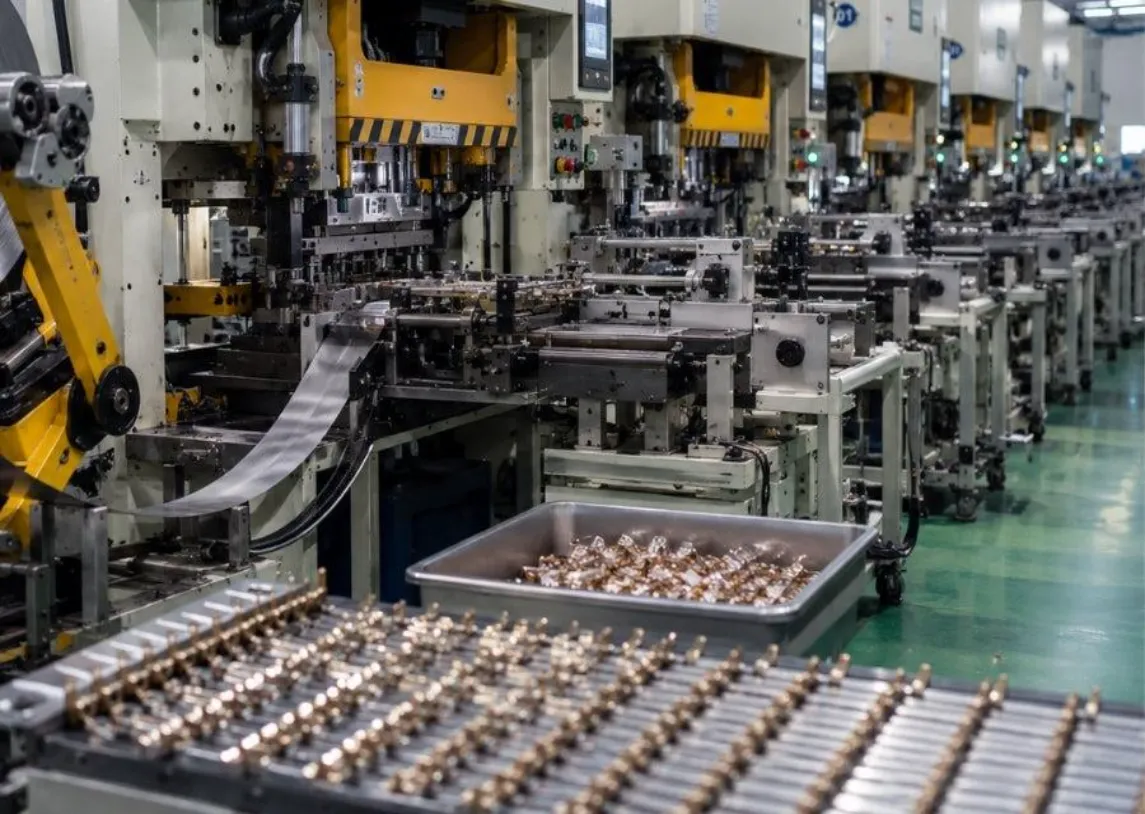
Progressive Stamping feeds a coil through stations that each do one job — piercing, bending, forming, cutoff. Every stroke produces one part, so output is steady and labor cost per piece stays low. We fix the strip layout and station sequence before any die block is cut, and check strip strength at the carrier and pilot positions. For parts within 300 mm and annual volumes above 100,000 pieces, this structure is normally the right choice.
2. Die structure matched to the press
A die that is correct on paper can still fail on the floor if shut height, tonnage or bolster size does not match the machine. We ask for the press model before design: shut height, stroke, bed size, and whether a coil feeder or blank loader is used. Guide pillar layout, stripper type, scrap chutes and lifters are then arranged around that machine, which cuts tryout time and avoids modification after delivery.
3. Tool steel and heat treatment sized to run length
Punch and die inserts carry the wear, so their steel grade and hardness follow the run length and material. For thin sheet and long runs we use Cr12MoV or SKD11 with vacuum heat treatment and surface coating; for heavy stock or high-strength steel, HSS inserts are used at the bending and trimming stations. Clearance is set by material thickness and type, not by one universal value, which keeps burr height under control through the tool life.
4. Maintenance planned into the tool
A die is a wearing part. We design it so common failure points can be reached without pulling the whole tool apart: replaceable inserts at the trimming and bending stations, guided punches, and a spare parts list issued with the die. Maintenance intervals are set by stroke count and recorded, so wear is replaced before it shows up as burr or dimensional drift.
Materials and Technical Specifications
| Project | Parameter Description |
| Product Name | Custom Metal Stamping Dies |
| Die Type | Progressive die, compound die, single-station die, forming and drawing die |
| Die Material | Cr12MoV, SKD11, DC53, HSS inserts; vacuum heat treatment and surface coating on request |
| Station Number | Generally 3–20 stations for progressive dies, set by part structure and annual volume |
| Part Tolerance | Dimensional tolerance ±0.02–0.05 mm depending on material and part feature |
| Die Life | 500,000–2,000,000 strokes between major maintenance, based on material and coating |
| Delivery Documents | Die drawing, strip layout, first-off inspection report, spare parts list |
| Service Mode | Die design and build, die repair and maintenance, small batch stamping support |
Die Design and Development
The Progressive Die Stamping tool design starts with a review of the part drawing and a DFM report. We point out features that will need an extra station, a relief cut or a tolerance adjustment before quoting, because those decisions change the die cost. Strip layout, station sequence and die structure are then issued for customer approval.
After approval, die block, punches and inserts are machined, heat treated and ground in-house. Assembly is followed by tryout on a press of matching tonnage: strip feeding, pilot engagement, burr height and part dimensions are checked, and clearance and stripper pressure are adjusted until first-off parts meet the drawing. Samples and inspection data go to the customer for approval before release.
Quality Control
Every Metal Stamping Dies set has its components measured on a coordinate measuring machine before assembly, with punch and die clearance recorded station by station. During tryout we run a continuous strip, not single blanks, so feeding and pilot problems show up early. First-off parts are checked for all drawing dimensions, burr height and flatness, and a sample is kept as the reference for later production.
Each tool is delivered with its drawing set, tryout record, first-off report and spare parts list. When a die returns for repair, the same records are used to compare wear and confirm the fix, keeping parts consistent across years of production.
Selection Key Points
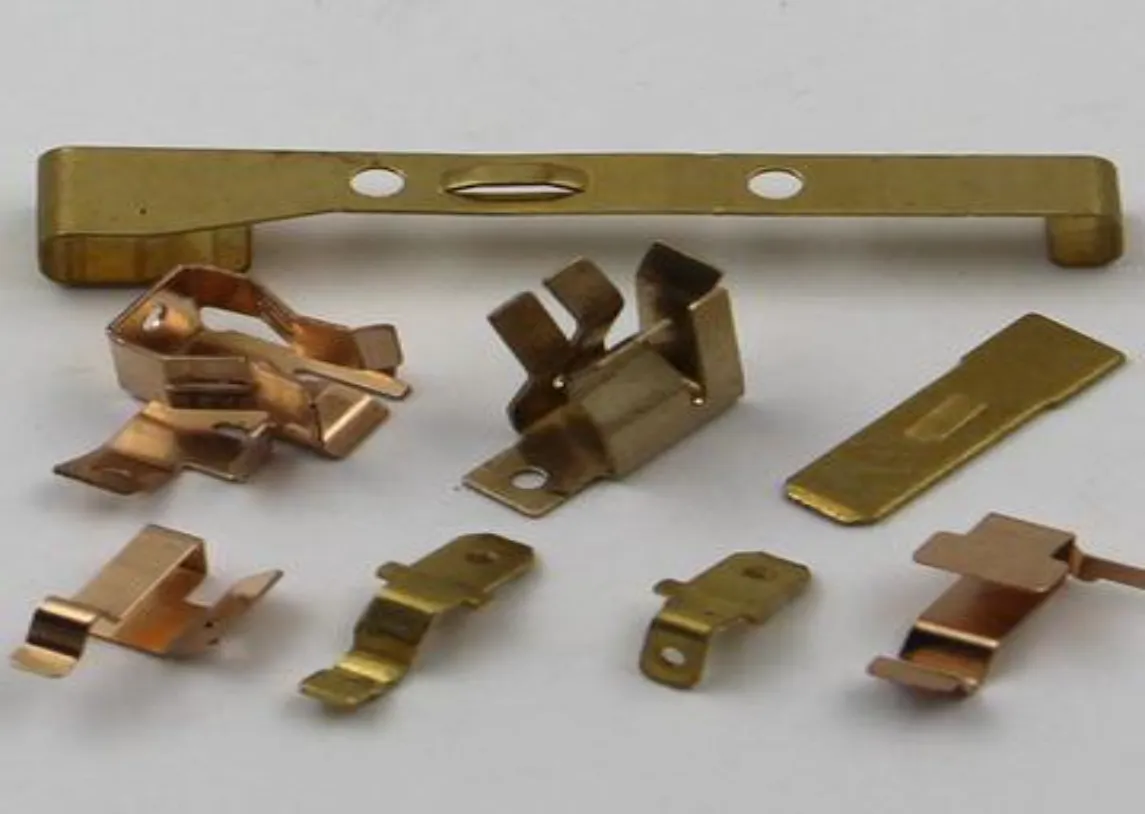
Choose the structure for a Custom Metal Stamping Dies project by volume first: under roughly 10,000 pieces a year, a compound or single-station die is often cheaper overall than a progressive tool; above that, the progressive route pays back through labor and cycle time. Then confirm material grade and thickness, tolerance on critical features, and the press that will run the die. If the part has sharp bends, deep draws or close hole-to-edge distances, tell us at the quotation stage — these features decide station count and die size, and changing them after the die is built is expensive.
Cooperation Process
1. Drawing review: receive 2D drawings, 3D models or samples, and confirm material, thickness, tolerance and annual volume.
2. DFM and quotation: issue a feasibility report on strip layout and die structure, with a quotation and lead time.
3. Die design: complete strip layout, die assembly drawing and station sequence, and submit for customer approval.
4. Machining and assembly: cut, heat treat, grind and assemble in-house, with component inspection before assembly.
5. Tryout and sampling: run tryout on a matching press, adjust clearance and pressure, submit first-off samples with data.
6. Delivery and support: release the tool with drawings, records and spare parts list, and support maintenance and repair.
Why choose us
Our tool room, stamping shop and inspection room sit in the same building, so design, machining and tryout are not split between suppliers. Strip layout and die structure are decided by the people who will run the tool, which shortens the loop between a problem and a fix. We have built progressive and compound dies for electronics, hardware and automotive parts, and are used to the drawing and record requirements of overseas audits. For your next Custom Metal Stamping Dies project, send a part drawing and we will come back with a die proposal, station layout and quotation.
FAQ
Can you build a die from our drawings or samples?
Yes. We can evaluate 2D drawings, 3D models or physical samples, confirm strip layout and die structure, and move to design after the quotation is agreed.
What information do you need for a quotation?
Part drawing or sample, material grade and thickness, critical tolerances, annual volume, and the press the die will run on if it is already fixed.
What kind of dies can you make?
Progressive, compound, single-station, forming and drawing dies are all covered; the structure is chosen by part geometry and volume.
How long does the sample stage take?
The sample cycle depends on die complexity and component procurement. Batch delivery time is set after sample approval.
Can you provide inspection and traceability documents?
Yes. Die drawings, strip layout, first-off inspection reports and spare parts lists can be supplied with each tool.
Do you support small batch orders after die approval?
After the design and sample are confirmed, we can take small batch trial production before scaling to volume.
Related Category
Send Inquiry
Please feel free to give your inquiry in the form below. We will reply you in 24 hours.