
- English
- Español
- Português
- русский
- Français
- 日本語
- Deutsch
- tiếng Việt
- Italiano
- Nederlands
- ภาษาไทย
- Polski
- 한국어
- Svenska
- magyar
- Malay
- বাংলা ভাষার
- Dansk
- Suomi
- हिन्दी
- Pilipino
- Türkçe
- Gaeilge
- العربية
- Indonesia
- Norsk
- تمل
- český
- ελληνικά
- український
- Javanese
- فارسی
- தமிழ்
- తెలుగు
- नेपाली
- Burmese
- български
- ລາວ
- Latine
- Қазақша
- Euskal
- Azərbaycan
- Slovenský jazyk
- Македонски
- Lietuvos
- Eesti Keel
- Română
- Slovenski
- मराठी
- Srpski језик
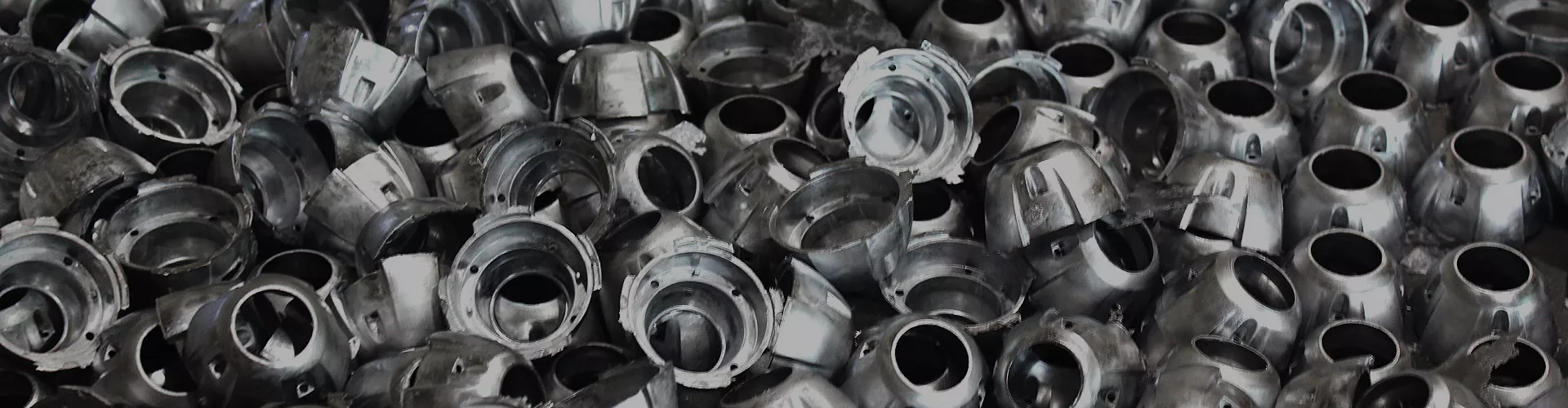



Casting Medical Valve
Xiamen Hongyu Intelligent Technology Co., Ltd., as a professional supplier and manufacturer from China, focuses on the customization and batch supply of Casting Medical Valve. Relying on years of experience in medical fluid component casting manufacturing, the integrated structure of the valve body ensures stable air tightness and controllable internal flow channel cleanliness. It supports ODM/OEM drawings and sample customization, and can deliver component solutions with complete batch testing data, meeting the batch matching requirements of overseas medical equipment manufacturers and system integrators.
Send Inquiry
Product Description
Product Introduction
Die-casting medical valves are key metal control components within the medical fluid system. They are formed into an integrated valve blank through high-pressure die-casting, and then undergo precise machining, flow channel cleaning, and sealing assembly to obtain the finished product. Unlike ordinary industrial valves, medical equipment has extremely high requirements for the cleanliness of the valve body interior, pressure resistance sealing performance, and compatibility with the medium. There are various types of medical valve in the market. The die-casting forming solution, with its integrated structure, has unique competitive advantages in terms of batch cost and structural strength.
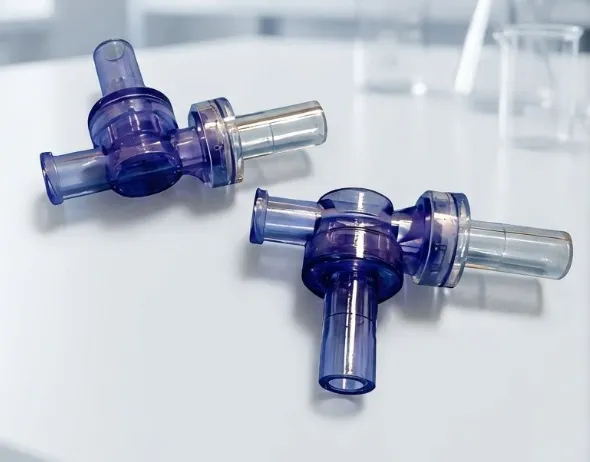
Product Core Features
1. Integrated die-casting structure eliminates leakage risks
The working conditions of medical fluid components are complex. The structural strength and sealing reliability of the valve body directly determine the safety of the medical equipment operation. Die-casting integration can reduce the gap between valve body components and reduce the risk of medium leakage at the source. The Die cast medical valve is integrally cast by relying on the high-pressure die-casting process, avoiding the weak points brought by welding assembly. The overall structural strength is higher, and the internal flow channels can be specifically optimized according to the equipment flow parameters.
2. The material performance Adapter class medical fluid medium
In response to the frequent start-stop usage scenarios of medical equipment, the valve body material takes into account both corrosion resistance and machining performance, and is suitable for various medical media such as oxygen and compressed air. The product supports multi-channel structure customization, among which 3 way medical valve can complete the commutation and diversion of three channels of fluid, and is mostly used for monitoring equipment and respiratory supporting devices.
3. Lead project review Avoid production defects in advance
All structural schemes will undergo preliminary engineering reviews to predict defects such as die-casting air holes and porosity, reducing the subsequent production risks during the design stage. The Casting Medical Valve fully considers the assembly space of the entire medical equipment during its design and can adjust the valve body size according to the customer's overall structure for compatibility.
Materials and technical specifications
| Project | Parameter Description |
| Product Name | Casting Medical Valve |
| Basic Process | High-pressure casting, precision machining, surface passivation treatment |
| Optional Materials Medical | aluminum alloy, medical copper alloy (selected as per requirement) |
| Structural Form | Straight-through type, three-way type, supports customizing flow channels and interfaces according to drawings |
| Performance Requirements | Pressure tightness test, pressure resistance test, cleanliness treatment, in line with general requirements for medical components |
| Delivery Documents | Material certificate, batch inspection report, can be provided as per requirement |
| Service Mode | ODM/OEM customization, batch production, supports small batch samples |
Note: The above are general reference specifications. The final parameters shall be subject to the confirmation of the customer's drawing. For special pressure resistance and special medium operating conditions, please communicate in advance and conduct a preliminary process assessment.
Die Casting Process and Mold Development
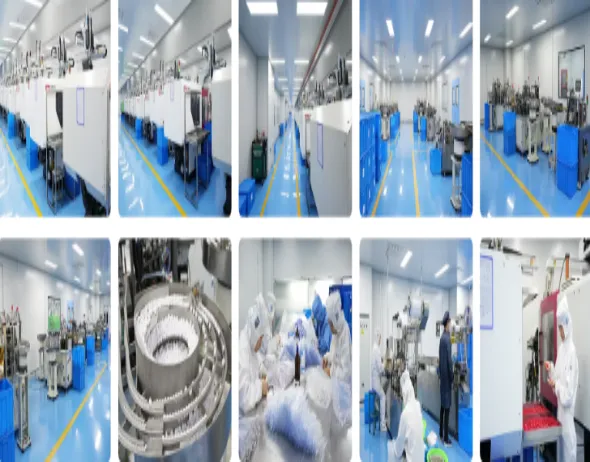
As a Die cast medical valve manufacturer, for medical castings, we increase the frequency of regular mold maintenance to ensure the consistency of blanks. After the die-casting of the raw material is completed, we sequentially perform deburring, precision machining, flow channel cleaning, and surface treatment to remove the residual debris from the processing, meeting the cleanliness standards for medical components. Most ordinary die-casting manufacturers only focus on appearance quality, while medical valve bodies place greater emphasis on the internal flow channel state. We have solidified the internal cleanliness control as a process standard to avoid potential pipeline safety hazards caused by debris residue.
Quality Control
During the incoming material stage, we verify the material specifications and keep the material certificates; for the die-casting blanks, we conduct sampling flaw detection to identify internal casting defects; after machining, we perform size inspections; after assembly, we conduct airtightness and pressure resistance tests on each component. As a medical valve factory, we use image measurement instruments and dedicated pressure testing fixtures to complete all tests. All inspection records are archived and preserved by batch.
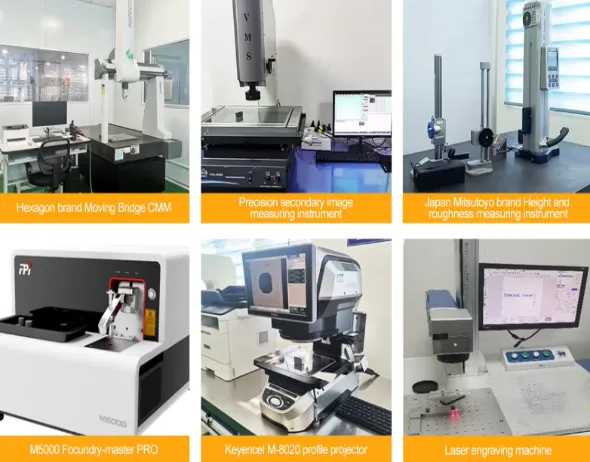
In addition to size items, we focus on verifying the cleanliness of the valve body flow channels to prevent the retention of metal debris. As a medical valve manufacturer, we are well aware of the significance of the traceability of medical components for overseas project audits. All customized projects must complete the first-piece confirmation. Once the first piece is qualified, batch production can commence. We can output corresponding test records according to customer requirements to meet the project audit requirements of overseas medical equipment manufacturers.
Selection Key Points
During the selection stage, it is necessary to confirm the medium type, working pressure, flow rate, interface specifications, and installation space. Different complete machine equipment have different requirements for the valve body passage. Some small-sized equipment need catheter valve to be compatible with the catheter pipeline, and the valve body is small in size, which imposes strict requirements on micro-molding and machining accuracy.
If it is used for oxygen supply supporting equipment, the pressure resistance performance and sealing performance of the oxygen tank valve are the core indicators. The valve body interface must be precisely matched with the oxygen tank body pipeline. We recommend providing complete drawings or physical samples. Our engineering team will assess the difficulty of die casting and processing feasibility, and provide structural optimization suggestions to reduce time and cost losses caused by later mold modification.
Customized cooperation process
1. Receiving drawings/samples: Receive 2D drawings, 3D models or physical samples from the customer, collect information such as materials, pressure, batch size, etc.
2. Engineering assessment: Evaluate the feasibility of die casting and identify potential risks, output a preliminary plan and quotation
3. Mold development: Customize the die casting mold for the valve body, complete trial molding and modification
4. Sample production: Produce samples, complete size and air-tightness performance tests, and submit to the customer for confirmation
5. Batch production: After sample confirmation, start batch production, implement full-process quality control
6. Inspection and delivery: Complete final inspection, package as required, arrange for shipment, and simultaneously deliver relevant test materials
Why choose us?
We have an independent mold processing workshop and a die-casting production workshop. The mold development, die-casting molding, precision machining, and final gas-tightness testing of medical fluid valve bodies are all completed in-house in a closed-loop manner. Core processes are not outsourced. We can effectively control delivery schedules and ensure consistency in quality. Our team has years of experience in implementing medical-type die-casting parts projects and is familiar with overseas medical supply chain auditing standards. After receiving the drawings, we can immediately conduct die-casting simulation analysis, identify manufacturing risks such as flow channels, seals, and shrinkage cavities in advance, and simultaneously provide structural optimization solutions. We can provide complete traceable materials such as material sheets, flaw detection reports, and gas-tightness test records on demand, supporting the simultaneous connection of small-batch samples and large-scale orders. Our core product, Casting Medical Valve, can be adapted to a variety of overseas medical equipment customization projects. We welcome providing drawings for assessment and sample production.
FAQ
Can you customize metal fluid control components according to drawings?
We support custom development based on drawings, 3D models or physical samples for project evaluation.
What performance tests will be done for finished metal fluid control parts?
We carry out air tightness, pressure resistance and dimensional inspection for finished products.
What is your sample and mass production lead time?
Sample lead time depends on mould complexity, mass production time is confirmed after sample approval.
Do you accept small batch trial orders for custom metal components?
Small trial orders are acceptable after technical solution and sample confirmation.
Can you provide test documents for batch produced products?
Material certificates and batch inspection records can be provided upon your request.
Related Category
Send Inquiry
Please feel free to give your inquiry in the form below. We will reply you in 24 hours.