
- English
- Español
- Português
- русский
- Français
- 日本語
- Deutsch
- tiếng Việt
- Italiano
- Nederlands
- ภาษาไทย
- Polski
- 한국어
- Svenska
- magyar
- Malay
- বাংলা ভাষার
- Dansk
- Suomi
- हिन्दी
- Pilipino
- Türkçe
- Gaeilge
- العربية
- Indonesia
- Norsk
- تمل
- český
- ελληνικά
- український
- Javanese
- فارسی
- தமிழ்
- తెలుగు
- नेपाली
- Burmese
- български
- ລາວ
- Latine
- Қазақша
- Euskal
- Azərbaycan
- Slovenský jazyk
- Македонски
- Lietuvos
- Eesti Keel
- Română
- Slovenski
- मराठी
- Srpski језик

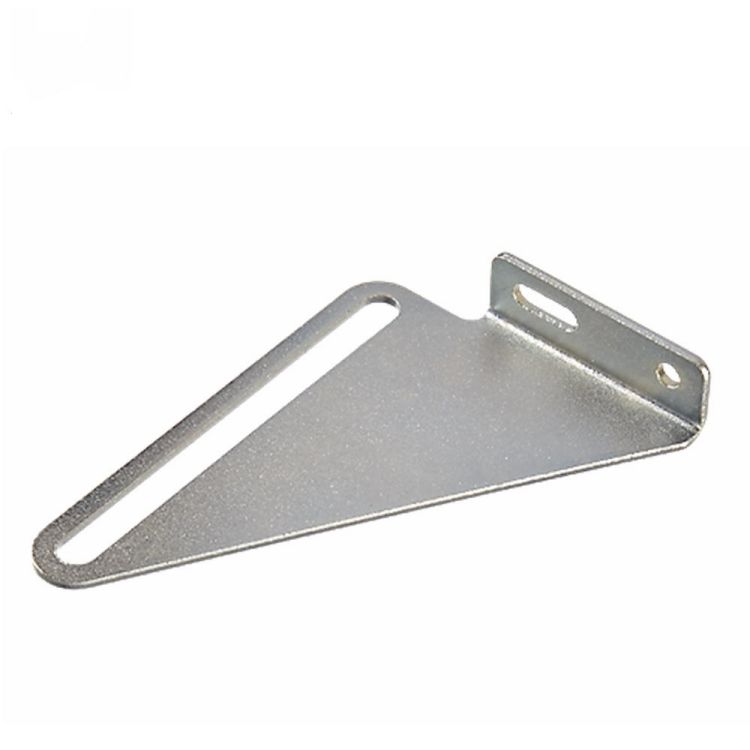
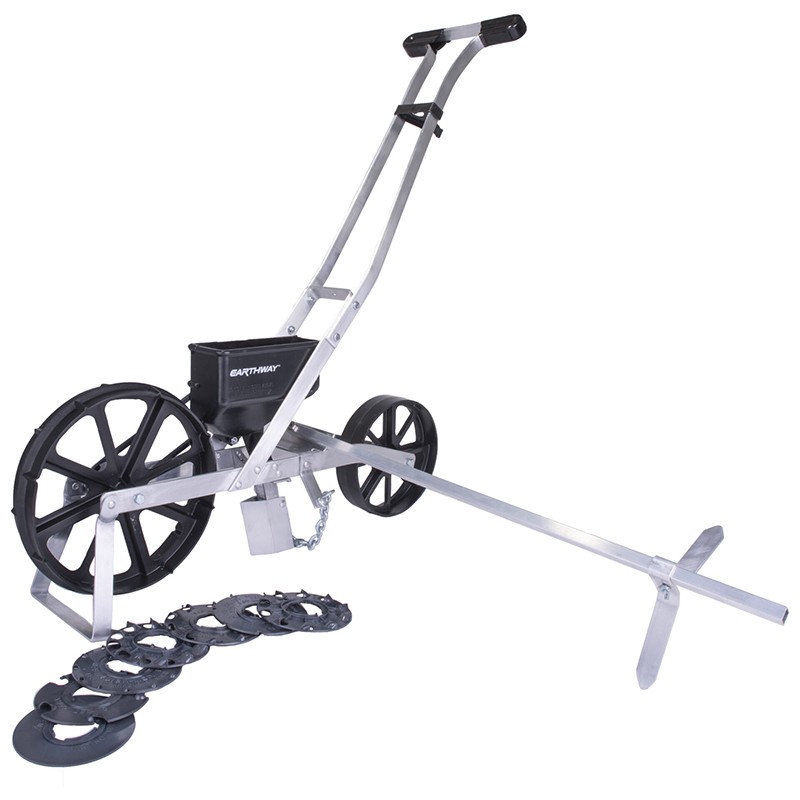
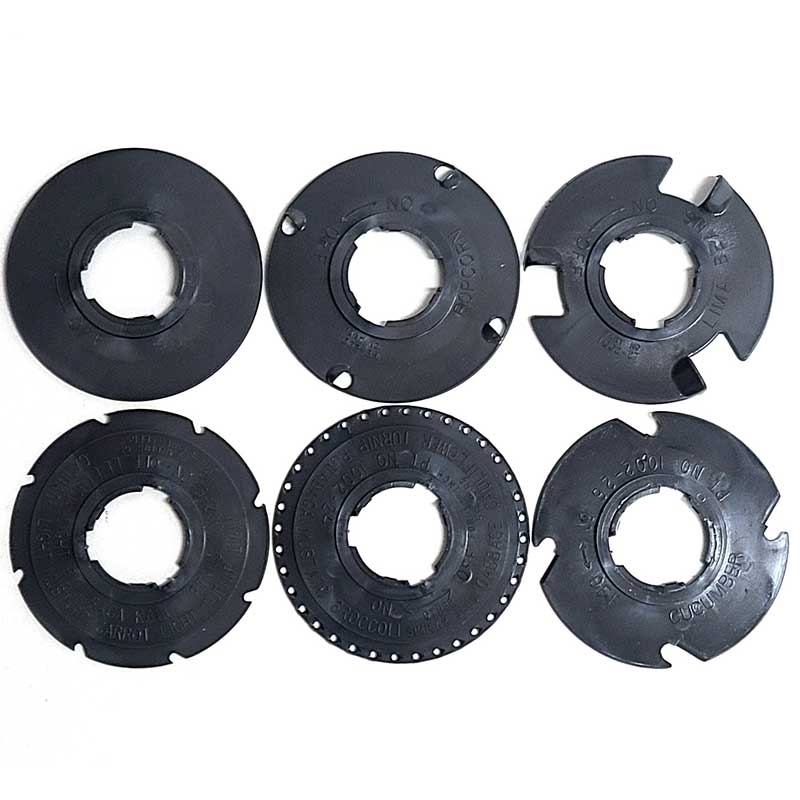
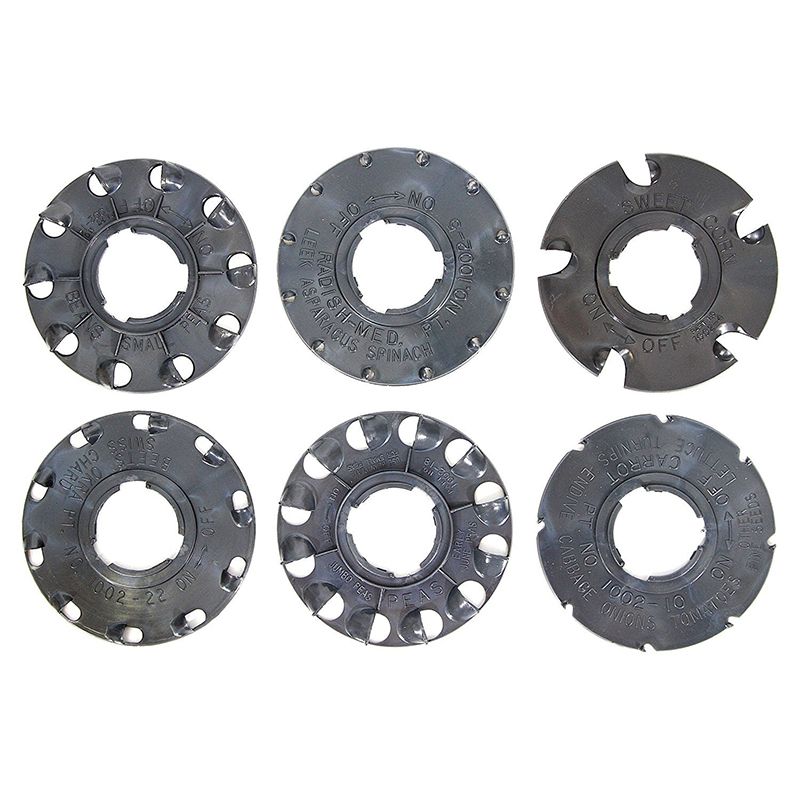
Casting Seeder Base-Plates
Xiamen Hongyu Intelligent Technology Co., Ltd., located in China, specializes in die-casting products. With a mature die-casting process system, the company supplies reliable Casting Seeder Base-Plates cast from aluminum alloy or cast iron, with customized mounting holes, top face size and rib layout, for grain cleaners, seed processing lines and screening equipment.
Send Inquiry
Product Description
Xiamen Hongyu Intelligent Technology Co., Ltd. operates a standardized die-casting and machining workshop. Every Casting Seeder Base-Plates we produce balances flat mounting surface with structural rigidity, and die design, casting, face milling and drilling all stay in one facility. With years of experience in metal forming and a complete quality control system, we provide stable and reliable solutions for your sorting equipment projects.
Custom Base-Plate Structure
A seeder base-plate is the flat bed that carries the bearing housing, motor and frame of sorting equipment: the top face bolts the whole unit down, the drilled holes fix components at the right position, and the ribs underneath keep the plate flat under vibration. We cast the blank near-net shape, then mill the mounting face and drill the holes to drawing. Compared with a welded or riveted bed, the one-piece casting has no loose seams, stays flat under long vibration and keeps component alignment over service. Weight-reduction pockets and lifting holes can also be added where they do not affect stiffness, so the plate stays strong without adding unnecessary weight to your machine.
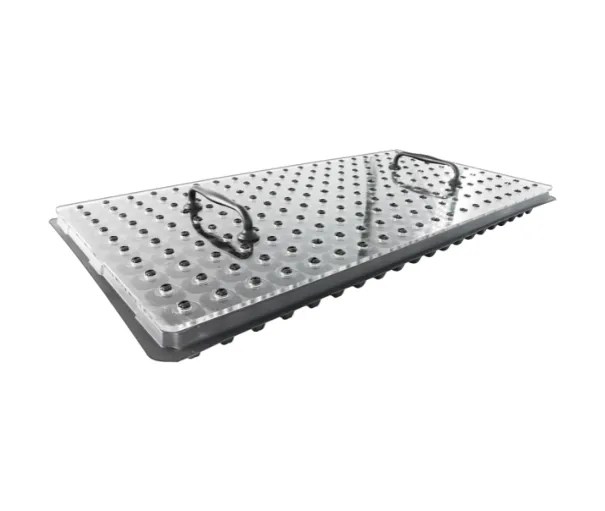
Die Casting vs Sand Casting
Cheaper base-plates on the market are sand cast: the surface is porous, wall thickness varies, and the top face warps after aging. Our base-plates are die cast in hardened tool steel, with wall thickness held even, mounting face milled flat and hole positions held to drawing, so thousands of plates in one batch fit the same way as your approved sample. One die stays in service across your reorders, and our in-house control removes outside middlemen, keeping unit price, design changes and long-term wear as low as possible for you.
Base-Plate Materials
Base-plate material is chosen by load, vibration level and working environment, so the plate stays flat, strong and light under real working conditions. Aluminum alloy keeps the plate light and dissipates vibration well for mobile and portable equipment, while cast iron handles heavy load and continuous outdoor vibration. Beyond the casting grade, wall thickness, rib layout and mounting hole positions are also tuned to the working load, so the plate does not flex or warp under shaft force.
| Project | Parameter Description |
| Product Name | Casting Seeder Base-Plates |
| Basic Process | Die casting, deburring, face milling, drilling, tapping |
| Optional Materials | Aluminum alloy ADC12 / A380 / A356; cast iron HT200; ductile iron on request |
| Structural Form | Custom mounting holes, top face size, rib layout and weight reduction pockets |
| Performance Requirements | Mounting face flatness, hole position tolerance, thread inspection |
| Delivery Documents | Material certificate, dimensional report, batch inspection report on demand |
| Service Mode | ODM/OEM customization, small batch samples, volume orders |
Note: The below are general reference parameters. Final specs are subject to confirmed drawings. Contact us in advance for special load, vibration or environment requirements.
Flatness and Position
1. True Mounting Face
Every base-plate leaves the plant with a flat top face. We mill the fixing face in one setup, with flatness held within 0.05 mm per 100 mm, so the bearing housing and motor sit flush without shimming and the drive stays aligned under load.
2. Accurate Hole Positions
Mounting holes are drilled and tapped on machining centers to drawing, with position tolerance held tight, so your bearing housing, motor and guard bolt on without reaming or forcing, and interchangeability holds across reorders.
3. Long Service Life
The one-piece casting has no welded seam to crack under vibration, and ribs are arranged where load is high. In normal grain cleaning, seed processing and screening conditions, the plate stays flat and keeps alignment without early warping or corrosion.
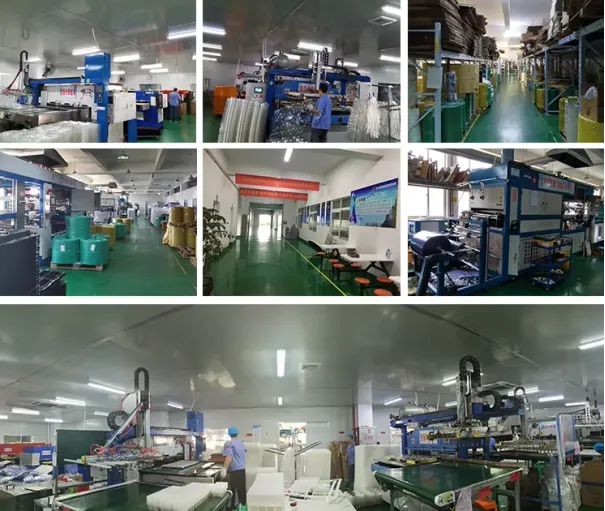
Tooling and Batch Control
Reliable alignment depends on the die behind a Casting Seeder Base-Plates. We build die-casting dies in our own workshop, with gating and overflow designed for dense, bubble-free castings, and hold cavity accuracy at ±0.05 mm; standard die life reaches 80,000 to 120,000 shots, with scheduled maintenance so dimensions stay stable over long runs. Every batch is sampled for flatness, hole position, thread and surface finish, with tensile strength held at 220-240 MPa, and records are archived by material lot and shift, so any shipped plate traces back to where it came from.
Multi-Industry Fit
You can use the base-plate on grain cleaners, seed processing lines, vibrating screens, sand and gravel classifiers, and chemical screening equipment, wherever components need a flat, bolted mounting bed. It also fits packaging machinery, food processing lines and small conveyor drives, as long as the top face and hole pattern match your drawing. Because every plate is cast and machined on the same in-house chain, performance holds across these conditions: aluminum plates stay light for portable and mobile equipment; cast iron plates handle heavy load and continuous outdoor use. Whatever load and vibration you run, we tune material, wall thickness and rib design to that application before the sample is cast.
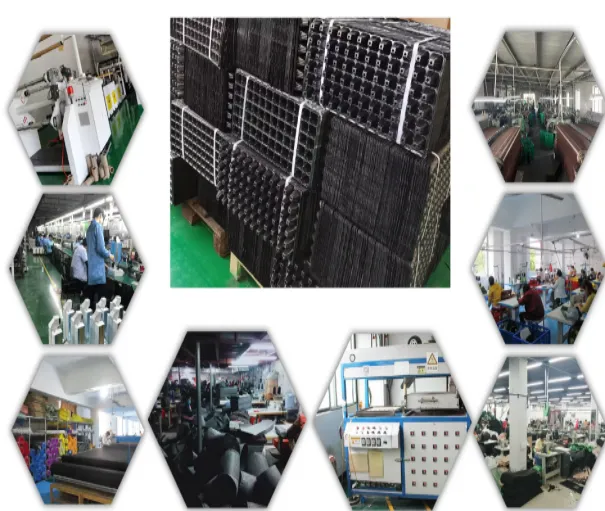
Sample to Order
Send us your drawing, a required size or a base-plate you already use, and we return a feasibility note and a firm quote within 24 hours. After delivery, every order comes with progress updates and a 24-hour response, and the approved sample of each order is kept on file, so your next reorder can be matched quickly. The order moves through these stages:
1. Drawing receiving: receive your drawing, required size, quantity and working condition.
2. Evaluation and quote: assess casting feasibility and tooling needs, reply within 24 hours.
3. Structure suggestion: suggest material, wall thickness and rib layout for your equipment.
4. Tooling preparation: build the die, standard cycle about 10-15 working days.
5. Sample making: cast and machine the first sample, check dimensions, submit for your confirmation.
6. Mass production: start bulk production after sample approval.
7. Inspection and delivery: final dimensional check, packing, shipping and documents.
Why Choose Us?
We run independent die-casting and machining workshops covering 160T to 800T casting equipment, so die making, casting, machining and drilling are completed in one facility. Our team has years of experience in custom cast base-plates, and design checks run as soon as your drawing arrives. Backed by in-house control, our core product Casting Seeder Base-Plates fits your sorting equipment projects. We support small samples and volume orders alike, and we keep the approved sample from every order on file for fast matching. Send us your drawing for evaluation and prototyping.
FAQ
Who owns the die, and do you keep it for repeat orders of Casting Seeder Base-Plates?
Once you pay the die fee, the die belongs to your company and is stored and maintained in our tooling shop for your program. If you ever move production to another supplier, we release the die to you. Normal die maintenance and wear-part replacement during the warranty period are on us, and every reorder runs on the same tool with no new setup.
After the die is cut, can I get a first-shot sample of the Casting Seeder Base-Plates before bulk production?
Yes. As soon as the die is tried out we cast 3 to 5 first-shot plates, machine them, check flatness, hole position and thread against your drawing, and ship them to you with a CMM dimensional report for approval before any volume run. If the T1 shows a die-side issue, we fix the die at our cost before you confirm.
Do you review my drawing and suggest casting-friendly changes before we cut the die?
Yes. As soon as your drawing arrives we issue a written DFM note covering wall thickness, draft angle, fillet radius and rib layout, and push back where the geometry would cause shrinkage, cold shuts or trapped gas. On request we run a mold-flow simulation before steel is cut, so you see filling and feeding direction before tooling starts.
What if I need to change the Casting Seeder Base-Plates design after the die is cut?
Changes are free before the die is cut. Once the steel is cut, local edits are quoted as die modifications and usually far cheaper than building a new die, because we only rework the cavity area that changed.
What surface treatment do you apply to Casting Seeder Base-Plates for outdoor equipment?
Surface treatment is controlled by our process sheet and run through qualified plating and painting partners. For outdoor use we apply powder coating or wet paint after machining, with machined mounting faces and dowel holes masked so bolt-up and locating fits are not affected. Cast iron plates get a rust-inhibiting primer before top coat, and anodizing on aluminum plates is held tight to note the micro-inch build on masked surfaces.
Can you add secondary machined features like T-slots, dowel pin holes, chamfers or threaded inserts to the Casting Seeder Base-Plates?
Yes. Beyond face milling and drilling we mill T-slots, bore dowel pin holes, chamfer edges and press in threaded inserts or mounting bushings to your drawing. Tight-tolerance pockets are wire-EDM or finish-machined on machining centers, and threads are rolled or milled to your class, so you receive a ready-to-assemble plate rather than a raw casting.
Can you reproduce a Casting Seeder Base-Plate we already run on our machine?
Yes. Send us the old plate, its dimensions or a clear drawing, and we evaluate casting feasibility and reproduce the geometry, material, machining and flatness to match your current part.
Do you stress-relieve the Casting Seeder Base-Plates after casting to prevent later warping?
Yes. Aluminum plates go through T6 solution treatment and aging, cast iron plates through stress-relief tempering, with heat-treatment batch certificates issued. Plates are then finish-milled on the top face after heat treatment, so the plate stays flat after machining and does not warp months later on your equipment.
Do you take OEM/ODM Casting Seeder Base-Plates from our own drawings?
Yes. Send us your drawing, a required size or a sample plate, and we handle casting feasibility, die design, sampling and mass production in-house, with wall thickness, rib layout and hole positions tuned to your machine.
Related Category
Send Inquiry
Please feel free to give your inquiry in the form below. We will reply you in 24 hours.