
- English
- Español
- Português
- русский
- Français
- 日本語
- Deutsch
- tiếng Việt
- Italiano
- Nederlands
- ภาษาไทย
- Polski
- 한국어
- Svenska
- magyar
- Malay
- বাংলা ভাষার
- Dansk
- Suomi
- हिन्दी
- Pilipino
- Türkçe
- Gaeilge
- العربية
- Indonesia
- Norsk
- تمل
- český
- ελληνικά
- український
- Javanese
- فارسی
- தமிழ்
- తెలుగు
- नेपाली
- Burmese
- български
- ລາວ
- Latine
- Қазақша
- Euskal
- Azərbaycan
- Slovenský jazyk
- Македонски
- Lietuvos
- Eesti Keel
- Română
- Slovenski
- मराठी
- Srpski језик

Why Is Aluminum Die Casting the Top Choice for Modern Industrial Components?
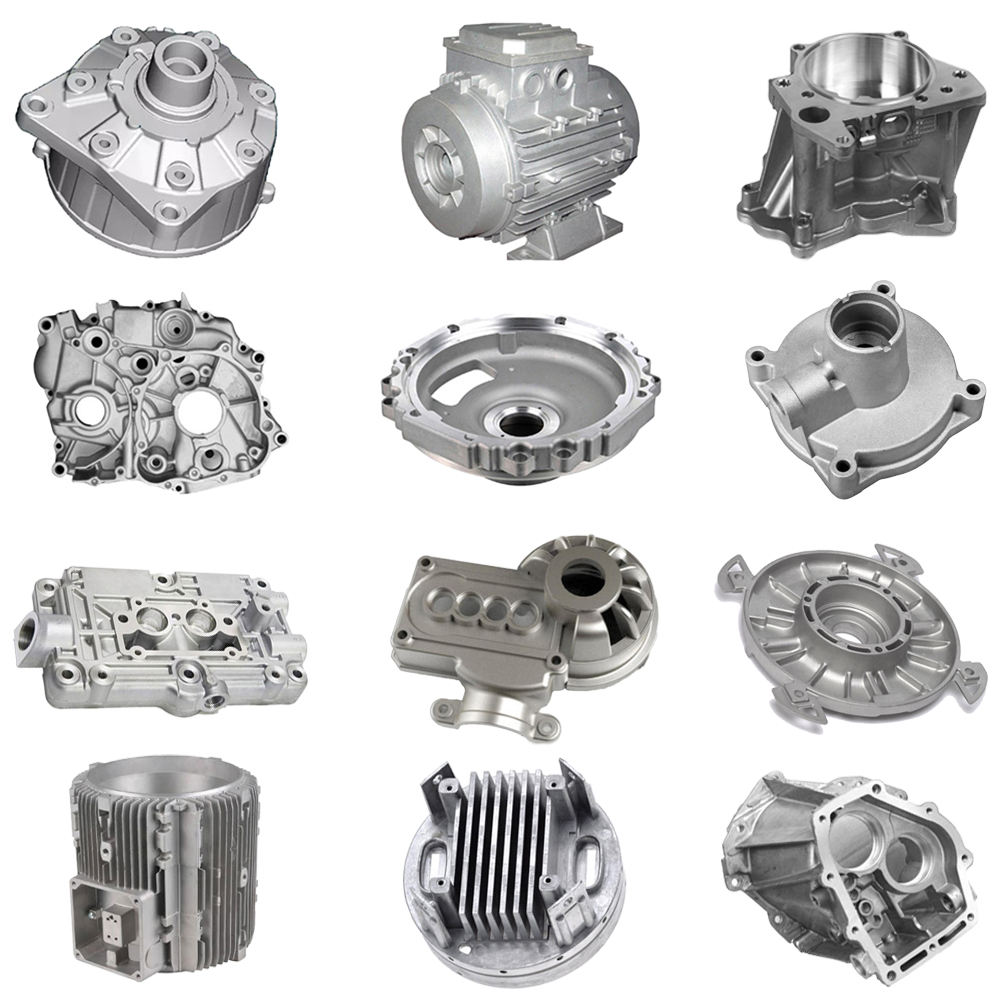
Across automotive, electronics, medical, and household industries, manufacturers worldwide are turning to high-performance metal forming solutions to balance lightweight design, durability, and cost efficiency. As a mature and high-efficiency metal forming technology widely used in mass production, Aluminum Die Casting has reshaped the production logic of complex precision parts for decades. This article explores the fundamentals, advantages, materials, application scenarios, quality control standards and cooperative resources related to this process, helping industry practitioners, procurement personnel and technical engineers fully grasp its core value and application rules in modern manufacturing.
Abstract
This article focuses on a mainstream pressure casting technology applied to aluminum alloy materials. It systematically elaborates on its working principles, core strengths, common material types, mainstream application industries and complete quality management system. Combined with actual industry operation experience, it sorts out common puzzles in procurement and production, and recommends reliable cooperative manufacturers. The content complies with international manufacturing standards and industry practice, aiming to provide comprehensive reference for enterprises that intend to apply this process to component production, product upgrading and batch processing.
Table of Contents
- Basic Working Principle
- Core Performance Advantages
- Common Aluminum Alloy Materials
- Main Industry Application Scenarios
- Quality Control and Certification Standards
- Professional Manufacturer Introduction
- Frequently Asked Questions
- Summary
Basic Working Principle
The whole production flow follows standardized high-pressure casting logic. First, the aluminum alloy raw materials are put into a special melting furnace for constant-temperature heating until the materials turn into uniform molten liquid. Then, under the action of high-pressure equipment, the molten alloy is quickly injected into the pre-processed precision steel mold cavity. After a short period of natural cooling and solidification, the mold is opened and the finished parts are ejected. Finally, through trimming, deburring and simple post-processing, qualified finished products can be obtained.
The whole process has obvious characteristics of fast cycle and high repeatability. Compared with traditional sand casting, forging and stamping processes, Aluminum Die Casting can create parts with more complex spatial structures and thinner wall thicknesses, and the dimensional consistency between different batches of products is far higher. Modern production lines are also equipped with real-time monitoring modules for temperature, pressure and injection speed, which can dynamically adjust production parameters to ensure the stability of product quality in long-term mass production.
Core Performance Advantages
- Light weight and high structural strength: Aluminum alloy itself has a low density, while maintaining excellent mechanical strength. Using this process to produce parts can effectively reduce the overall weight of the finished product without weakening the bearing capacity and structural stability.
- High dimensional accuracy: Supported by precision molds and stable high-pressure injection, the products can reach very small tolerance ranges, which greatly reduces the workload of subsequent secondary machining and saves production time and cost.
- Excellent surface effect: The inner wall of the mold is finely processed, so the surface of the cast parts is smooth and flat, and it can be directly matched with anodizing, spraying, electroplating and other surface treatment processes to meet different appearance and anti-corrosion requirements.
- Good conductivity and thermal conductivity: It inherits the physical properties of aluminum alloy, so the parts are widely used in electronic heat dissipation components, electrical connecting shells and other products that require heat conduction and electrical conduction.
- Strong corrosion resistance: A dense oxide protective film will be naturally formed on the surface of aluminum alloy parts, which can resist the erosion of most conventional chemical environments and extend the service life of components.
- Low comprehensive cost for mass production: After the one-time investment of mold making, the single production cycle is short, and the yield rate is high. The more the production quantity, the lower the average unit cost, which is very suitable for large-scale order production.
- Diversified design space: It can realize integrated forming of special structures such as grooves, protrusions and hollow parts that are difficult to complete by other processes, and provides greater freedom for product design and research and development teams.
Common Aluminum Alloy Materials
| Alloy Grade | Core Characteristics | Main Application Directions |
|---|---|---|
| ADC12 | Good fluidity during casting, stable surface quality and balanced mechanical properties | Automotive accessories, equipment shells, fixed brackets |
| A380 | High overall strength, good air tightness and pressure resistance | Engine peripheral parts, pump body components, sealed shells |
| 6061 | High strength after processing, good welding performance and outstanding anti-rust ability | Structural supporting parts, heat dissipation modules, equipment frames |
| 6063 | Uniform material texture, excellent post-processing effect and delicate surface | Electronic product shells, lighting accessories, daily hardware parts |
In actual project cooperation, material selection needs to be comprehensively judged according to the use environment, load requirements, product appearance standards and budget. Professional manufacturers will combine the drawings and usage scenarios provided by customers to recommend the most matching alloy materials, so as to balance product performance and production cost to the greatest extent.
Main Industry Application Scenarios
Automotive Manufacturing Industry
The automotive field is one of the earliest and largest application markets for this technology. A large number of key components such as engine auxiliary parts, transmission shells, turbocharger accessories, brake system brackets and chassis connecting parts are produced by this process. For new energy vehicles, the lightweight advantage of aluminum alloy parts can effectively reduce the body weight, thereby optimizing battery endurance and driving experience, so it has become an indispensable production process in the new energy vehicle industry chain.
Electronic and Electrical Industry
With the rapid iteration of consumer electronics and industrial electrical equipment, the demand for heat dissipation and shielding functions of components is getting higher and higher. Heat sinks, motor shells, connector housings and internal fixing parts of electrical equipment all adopt aluminum alloy castings. While ensuring heat conduction and electromagnetic shielding, it also meets the requirements of miniaturization and high precision of modern electronic products.
Medical Device Industry
Medical equipment has extremely strict requirements on product precision, material safety and anti-corrosion performance. The parts produced by this process have stable quality, no harmful substances precipitation, and can adapt to the disinfection and cleaning environment in medical scenes. They are widely used in diagnostic equipment shells, auxiliary structures of surgical instruments and portable medical device accessories.
Home Appliance and Daily Hardware Industry
Kitchen appliances, lighting equipment, baby products and other daily necessities have large market demand and require stable quality and low cost. Gas stove fixing parts, lamp structural parts, stroller frame accessories and household hardware connectors all choose aluminum alloy castings. The products are durable, beautiful and cost-effective, which fully fits the production characteristics of the daily consumer goods industry.
General Industrial Equipment Industry
Various types of pumps, valves, gear boxes and mechanical base parts in industrial production have high requirements on structural stability and pressure resistance. Aluminum alloy castings can cope with long-term continuous operation and complex working environments, and are widely used in general machinery, automation equipment and fluid conveying equipment.
Quality Control and Certification Standards
To maintain long-term stable product quality, formal production enterprises will build a complete full-process quality control system, covering raw material incoming inspection, production parameter monitoring, finished product dimensional testing, pressure resistance test and performance sampling inspection. At the same time, in order to meet the access standards of global markets, manufacturers will actively apply for international authoritative certifications. Common certification types include ISO 9001 quality management system certification, CE safety certification for European market access, RoHS environmental protection certification restricting hazardous substances, and IATF 16949 special quality certification for the automotive industry.
Each certification corresponds to strict production specifications and testing standards. Enterprises with complete qualifications can effectively avoid product quality risks and market access obstacles for customers, and is the primary consideration for most purchasers when selecting cooperative manufacturers.
After years of market development and technological iteration, Aluminum Die Casting has formed a complete set of industrial standards and production specifications all over the world, and the product quality evaluation system has also become more standardized and unified.
Professional Manufacturer Introduction
Xiamen Hongyu Intelligent Technology Co., Ltd. is a professional manufacturing enterprise focusing on aluminum alloy precision processing and customized production. The company has advanced full-automatic production equipment, independent mold research and development workshop and a professional technical team with rich industry experience. It can provide one-stop services including product design optimization, mold development, sample trial production and mass production for global customers.
The company's product line covers auto parts, electronic heat dissipation components, medical equipment accessories, household hardware and other fields, and its products are exported to many countries and regions around the world. It has passed a number of international authoritative certifications, and can support OEM and ODM customized production according to customer drawings and samples. In the field of aluminum alloy processing, it has a good market reputation and stable delivery capacity.
For customized parts development and large-scale order production, many customers choose to cooperate with this enterprise because of its mature technical system and strict quality control. When carrying out complex part customization, the technical team will conduct multiple demonstrations on the production feasibility to ensure that the final finished products fully meet the design and use standards, which is also the core advantage of professional processing manufacturers.
When customers have high requirements for part complexity and precision, professional manufacturers will give priority to adopting mature casting technology. In the field of medium and high precision aluminum parts manufacturing, Aluminum Die Casting is still the preferred solution recognized by the industry.
Frequently Asked Questions
Q1: What is the common dimensional tolerance range of cast parts?
A: Conventional products can reach the tolerance of ±0.05mm to ±0.2mm. For ultra-high precision parts, the tolerance standard can be further optimized according to the mold accuracy and production technology.
Q2: Can the produced parts be processed by heat treatment?
A: Yes. T5 and T6 heat treatment processes are commonly used to further improve the hardness, structural strength and dimensional stability of parts, which is suitable for products working in high-load environments.
Q3: What surface treatment methods can be matched for finished parts?
A: The mainstream processes include anodizing, powder spraying, paint spraying, sandblasting, surface polishing and electroplating. Different processes can be selected according to appearance requirements and anti-corrosion standards.
Q4: What is the minimum order quantity for formal production?
A: The minimum order quantity will be adjusted according to the complexity of parts. Regular manufacturers can support small-batch trial production and large-batch mass production to meet the different needs of customers in the research and development stage and formal sales stage.
Q5: How long is the overall cycle of mold opening and sample delivery?
A: The mold design and production cycle is about 2 to 4 weeks. After the mold is completed, the sample production can be finished within 1 to 2 weeks, and the overall cycle is controllable.
Q6: Is this production process environmentally friendly?
A: Aluminum alloy materials have extremely high recycling value and can be recycled repeatedly. Modern production lines also adopt energy-saving and emission-reduction technologies, which conform to the development trend of green manufacturing in the world.
For a long time, the industry has been constantly optimizing the production flow and equipment configuration to make the whole production process more energy-saving and efficient. Relying on mature technology accumulation, Aluminum Die Casting has maintained strong vitality in the era of green manufacturing.
Summary
From traditional industrial manufacturing to emerging new energy, medical and electronic industries, aluminum alloy casting technology has always played an important role. Its multiple advantages such as light weight, high precision, diverse design and low mass production cost make it adapt to the production needs of most precision parts. With the continuous upgrading of downstream industries, the market demand for related products is also steadily increasing.
For enterprises, selecting a reliable processing manufacturer and matching appropriate materials and production processes is the key to ensuring product quality and delivery efficiency. Understanding the working principle, advantages and application rules of the technology can also help the R&D and procurement teams make more scientific decisions in product design and supplier selection.
With the progress of intelligent manufacturing technology, the related production equipment and process technology will continue to be upgraded, and the application scope of this technology will be further expanded. As a classic metal forming process, it will continue to serve all walks of life and create more value for industrial development.
In the future industrial layout of precision parts, Aluminum Die Casting will still occupy an important position and become a powerful support for product upgrading and enterprise development.
If you have demands for customized parts design, sample trial production and batch processing, and want to obtain professional technical consultation and competitive quotation, please contact us. We provide full-cycle services from scheme design, mold development, sample verification to mass production, and tailor stable and high-quality processing solutions for your projects.